

It’s getting cold out, so let’s go inside Calgary’s museums.
Western Canada’s second largest museum, the Glenbow, opened in 1976 to house the donated collection of Eric Harvie. He founded the Glenbow Foundation in 1955 with art, photographs, documents, and geological and cultural artifacts representing Western Canada. The building is undergoing a $205 million renovation to capture its original vision as a public plaza. Indigenous history is also preserved and promoted at the Tsuut’ina Nation Culture/Museum.

Glenbow Museum, circa 1976, undergoing extensive renovations, November 2023. Photo courtesy of Anthony Imbrogno
For more prairie history, come to the Bow and Elbow Rivers’ confluence. It’s been inhabited for millennia and a North West Mounted Police fort was established in 1875. Take a tour of the grounds and see the replica of Fort Calgary’s two-storey barracks.
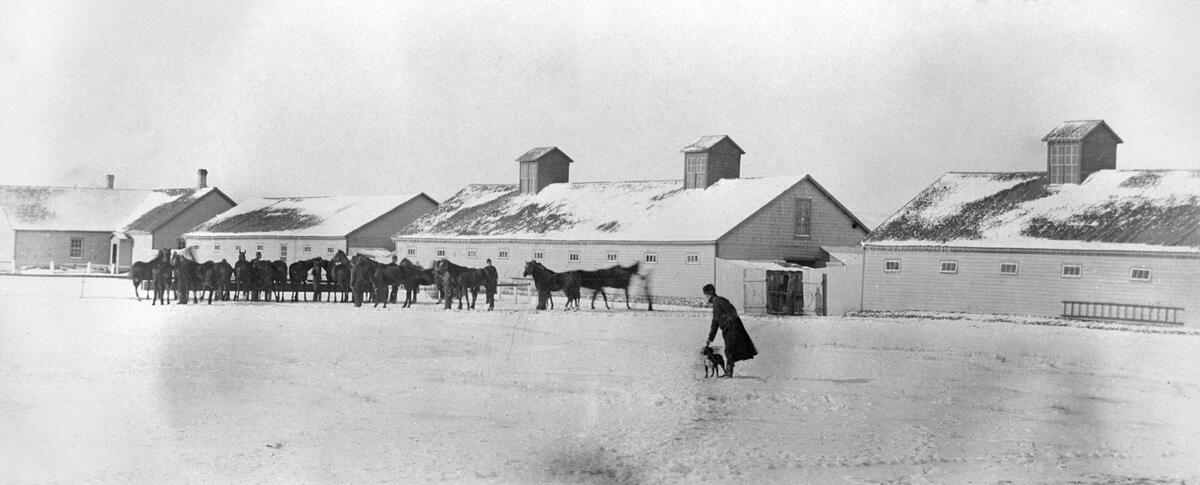
“North-West Mounted Police, Fort Calgary, Alberta.”, 1895, (CU1156910) by Unknown. Courtesy of Glenbow Library and Archives Collection, Libraries and Cultural Resources Digital Collections, University of Calgary. Q. M. stores at left, stables at right
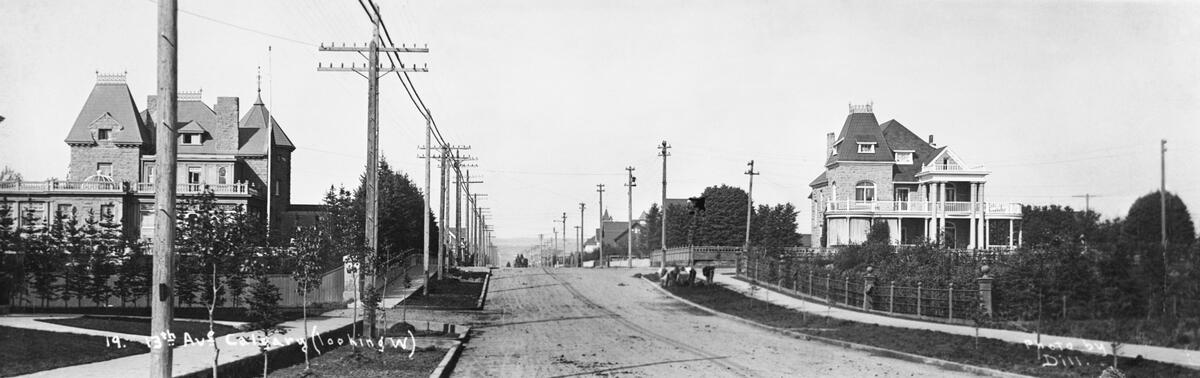
“Lougheed house (left), Van Wart house (right) Calgary, Alberta.”, [ca. 1911-1913], (CU198052) by Dill, Ralph. Courtesy of Glenbow Library and Archives Collection, Libraries and Cultural Resources Digital Collections, University of Calgary.
More modern history is at the Hangar Flight Museum and Canada’s Aviation Hall of Fame. Originally established in 1960, today’s museum opened in 1985 in the Bullock Helicopter Hangar. Built in 1941, it was part of the British Commonwealth Air Training Plan to protect the UK from the Nazi Luftwaffe.Speaking of militaria, The Military Museums in Altadore is Western Canada’s largest tri-service museum and Canada’s second largest military museum. It explores conflict worldwide and shares stories from Canada’s military engagements dating back to the War of 1812. Outside you can see a CF-5 Freedom Fighter jet and a piece of New York City’s World Trade Centre.
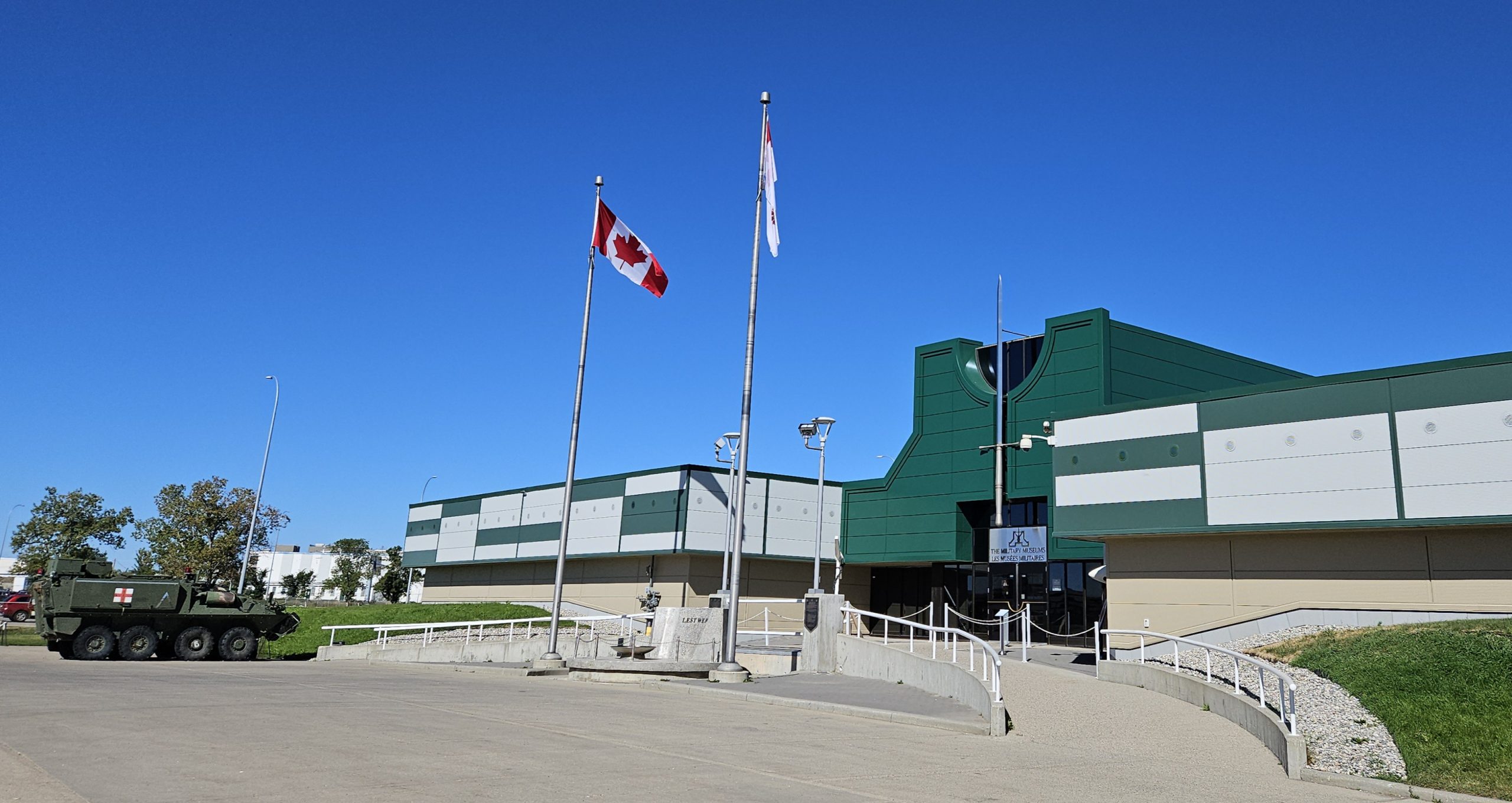
The Military Museums of Calgary, Alberta, September 2024. Photo courtesy of Anthony Imbrogno.
For the sciences, see Telus Spark. Originally located in Downtown’s West End, the Centennial Planetarium opened in 1967 and is an award-winning example of Brutalist architecture. In 2011, the Telus World of Science was renamed and moved to its current location along Nose Creek.
Calgary’s newest museum houses Canada’s Music Hall of Fames as well as 200 functioning instruments spanning 450 years of music. Studio Bell’s National Music Centre opened in 2016 as an architectural reference to acoustic vessels while inside it pays homage to Canada’s musical greats, from Bryan Adams to Oscar Peterson and Neil Young to Shania Twain and Joni Mitchell.
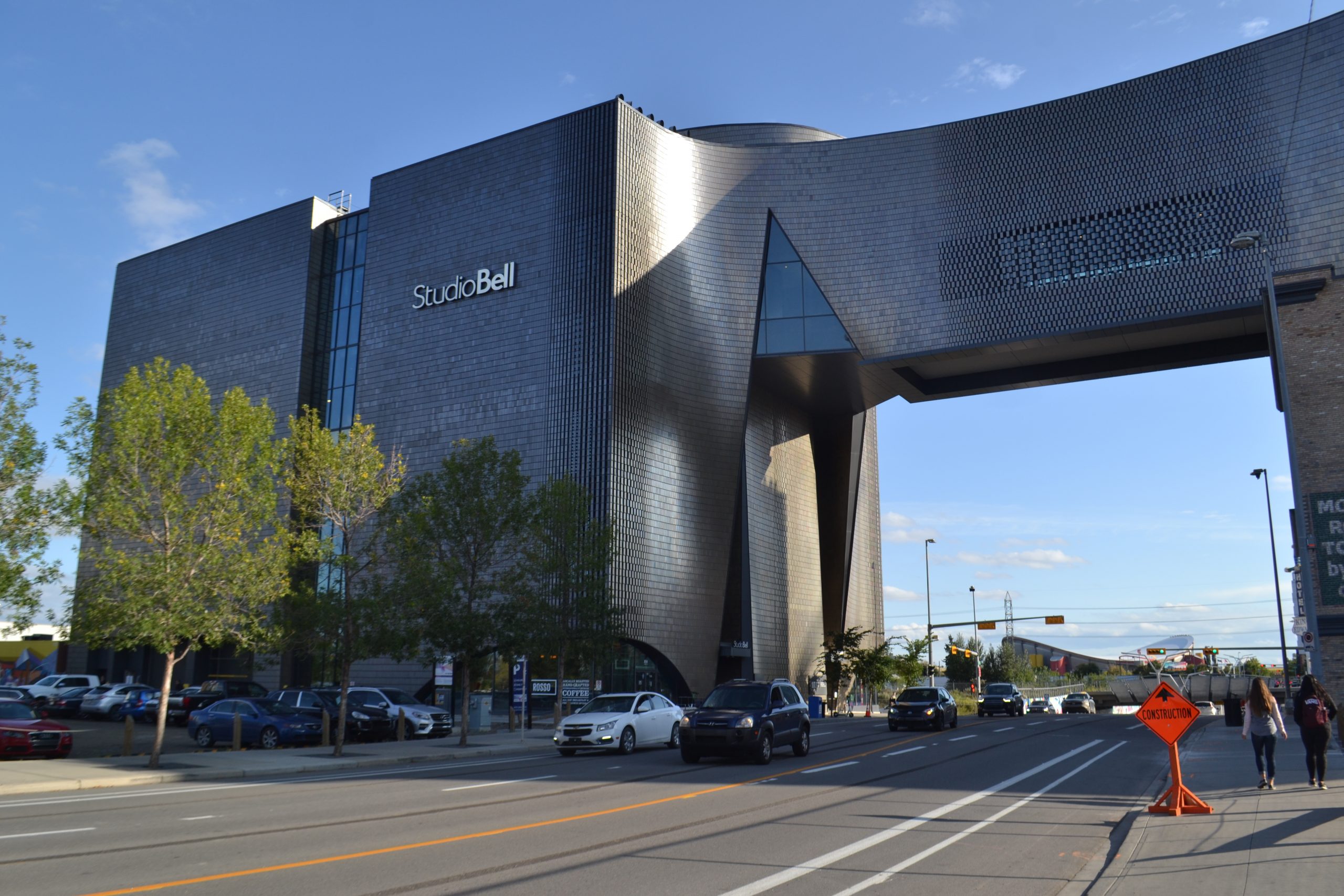
Studio Bell, Calgary, September 2019. Photo by daniel0685, Creative Commons Attribution 2.0 Generic license.
– Anthony Imbrogno is a volunteer with The Calgary Heritage Initiative Society/Heritage Inspires YYC
– All copyright images cannot be shared without prior permission